Program Extension

Board Certification in Medical Affairs (BCMAS™) Program - Extension

The #1 Ranked Medical Science Liaison (MSL) & Medical Affairs Training & Certification Program in the world. Purchase this extension and add an additional 6 months of access to your BCMAS program.

4.8

|

8k + Graduates

Board Certification in Medical Affairs (BCMAS™) Program -  ExtensionExtension
acma is accredited

Only purchase this extension if your program is expiring soon or has expired

BCMAS® 6 month extension

Extend your access to the world leading Board Certified Medical Affairs Specialist (BCMAS®) Program. This extension provides an additional 6 months to complete your certification, ideal for those with expiring or expired access. Don't miss your chance to earn the prestigious BCMAS® credentials through the #1 ranked medical science liaison (MSL) and medical affairs training program globally.

6 months access

Get an additional 6 months to complete your BCMAS® program

Your progress is saved

Jump back into the BCMAS® program exactly where you paused
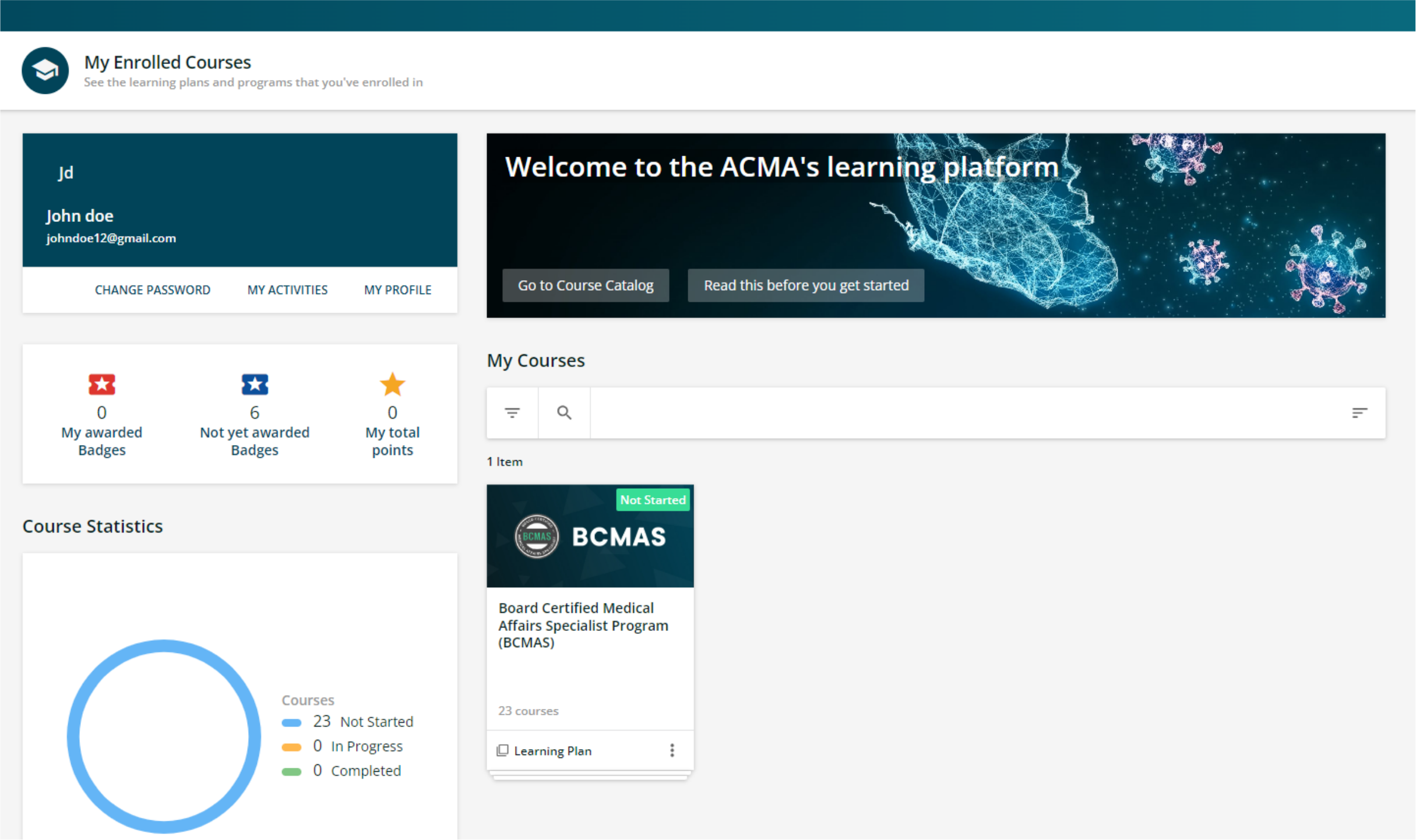
Product screenshot
90%
said BCMAS
Increased Understanding of Compliance
Increased Understanding of Regulatory Requirements
Increased Understanding of Medical Affairs' Cross-Functional Role
92%
of BCMAS-certified professionals reported being
More Prepared in their roles after completing BCMAS program
More Confident in their roles after completing BCMAS program
...regardless of years of experience
83%
BCMAS-Certified Professionals Say
They Are More Effective Than Non-BCMAS Counterparts
87%
of KOLs prefer speaking to a BCMAS certified MSL

BCMAS upgrades Medical Affairs teams from “adequate” to elite

12 Core Competencies
12 Knowledge checks
Case studies
Productivity Tools
Practice exam
Final board exam
Accredited certification
AI literacy
Artificial intelligence is reshaping the way Medical Affairs professionals synthesize data, communicate scientific information, and deliver value to stakeholders. This module provides a practical foundation in AI literacy, equipping professionals with an understanding of how large language models (LLMs) function, their limitations, and how to apply them responsibly in Medical Affairs activities. Learners will gain confidence in leveraging AI tools for research, insight generation, and compliant content development while maintaining scientific integrity and data privacy.
Medical Affairs has evolved from a support function to a strategic driver of organizational value. This module establishes a foundation for understanding the structure of the pharmaceutical industry, the drug development process, and the growing role of technology in enabling Medical Affairs strategy. Participants will learn how to integrate digital innovation, AI-assisted insight generation, and cross-functional collaboration to position Medical Affairs as a core pillar of evidence- based decision-making.
Clinical trials are the foundation of evidence generation and a critical interface for Medical Affairs engagement. This module provides advanced insight into trial design, statistical considerations, and Medical Affairs contributions throughout the research lifecycle. Participants will explore the expanding use of AI in protocol optimization, patient recruitment, and data interpretation, as well as the role of Medical Affairs in supporting investigator-initiated studies and post-market research initiatives.
The convergence of devices, diagnostics, and digital health tools has transformed therapeutic innovation and patient engagement. This module equips learners with the specialized knowledge needed to navigate device classifications, combination products, and diagnostic development while understanding how digital technologies and AI are accelerating innovation. Participants will learn how Medical Affairs contributes to device strategy, regulatory alignment, and evidence generation in this rapidly evolving landscape.
In an environment defined by value-based healthcare, demonstrating product value through data-driven insights is essential. This module explores the principles of health economics and outcomes research (HEOR), including cost-effectiveness modeling, payer engagement, and real-world evidence generation. Learners will also examine how data analytics and AI-enabled modeling can strengthen value communication and inform strategic decision- making across the product lifecycle.
Regulatory Affairs serves as the bridge between scientific innovation and public health protection. This module provides global regulatory frameworks while addressing how intelligent systems and automation are influencing submission preparation, data verification, and compliance processes.
Medical Science Liaisons (MSLs) are essential for connecting science, strategy, and stakeholder engagement. This module examines the evolving competencies required for MSL excellence, including scientific expertise, relationship management, and strategic field insight collection. Participants will explore how advanced analytics, AI- assisted literature review, and insight synthesis can enhance field effectiveness and strengthen Medical Affairs’ role in evidence dissemination and decision support.
Artificial intelligence is reshaping the way Medical Affairs professionals synthesize data, communicate scientific information, and deliver value to stakeholders. This module provides a practical foundation in AI literacy, equipping professionals with an understanding of how large language models (LLMs) function, their limitations, and how to apply them responsibly in Medical Affairs activities. Learners will gain confidence in leveraging AI tools for research, insight generation, and compliant content development while maintaining scientific integrity and data privacy.
Medical Affairs professionals play a pivotal role in generating and interpreting scientific evidence to guide clinical and commercial decision-making. This module provides frameworks for evaluating study quality, synthesizing literature, and applying evidence-based medicine principles. Participants will also explore how emerging technologies can streamline literature review, automate data synthesis, and support real-world evidence strategies that enhance scientific credibility.
Effective Medical Affairs leadership requires the ability to translate science into strategy. This module focuses on developing business acumen, strategic communication, and executive presence. Learners will strengthen their ability to interpret organizational priorities, demonstrate return on investment, and anticipate future trends using data-driven forecasting and analytical tools. The module also highlights how technology can support decisionmaking.
Ethical integrity and regulatory compliance are central to all Medical Affairs operations. This module explores global compliance standards, quality systems, and digital governance considerations as organizations adopt new technologies. Participants will learn to identify and manage data privacy risks, develop compliant workflows for AI- assisted processes, and maintain accountability through transparent documentation and review systems
Scientific communication is essential for evidence dissemination and stakeholder trust. This module examines publication planning, abstract development, and Good Publication Practice (GPP) principles while incorporating emerging methods for automation and AI-assisted writing. Learners will understand how to maintain ethical standards, ensure compliance with authorship criteria, and leverage technology to improve the efficiency and quality of scientific communication.
Medical Information functions as the central knowledge hub of Medical Affairs organizations. This module addresses how information teams manage scientific inquiries, develop response content, and support product lifecycle communications. Participants will explore how digital knowledge systems and Al-enabled tools can improve information accuracy, workflow efficiency, and compliance for medical information teams.

Documentation & Policies